Alumni shed light on human rights and intersectionality
Posted: 18 December 2025
On 5 December 2025, Australia Awards – Nepal and the National Indigenous Disabled Women Association Nepal hosted an interactive workshop in Kathmandu that focused on human rights and intersectional identities.
The event marked three international observances: International Day of People with Disability (3 December), World Human Rights Day (10 December) and the 16 Days of Activism against Gender-Based Violence (a global campaign that runs between International Day for the Elimination of Violence against Women on 25 November and World Human Rights Day).
More than 40 participants, including many Australia Awards alumni, actively engaged in the discussions.
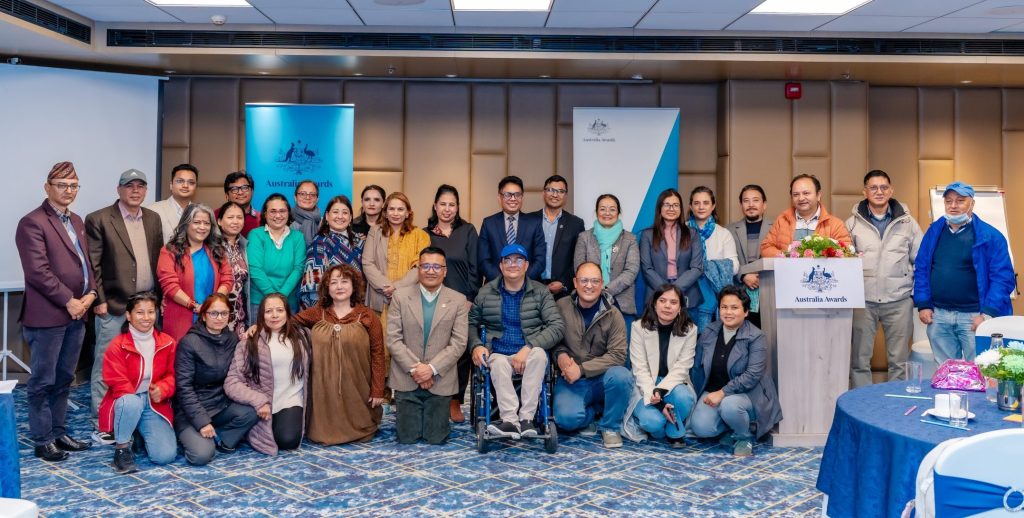
Participants pictured together at the event with Australia Awards – Nepal team.
Welcoming the participants, Dylan Jones-Virma, Head of Development at the Australian Embassy in Nepal, emphasised the “disproportionate challenges” faced by individuals based on gender, disability, caste and ethnicity. He said that “in a diverse society, understanding intersectional identities is critical to ensuring universal human rights”.
Human rights violations remain a global concern, but women and people with disability are particularly vulnerable. According to the United Nations, one in three women experiences gender-based violence in her lifetime. People with Disability Australia reports that women with disability are disproportionately affected by domestic, family and sexual violence, with digital violence (such as cyberstalking, image-based abuse and coercive control through devices) adding another layer.
Mr Jones-Virma highlighted the gravity of gender-based violence and urged participants to take action within their capacity to help end such abuse. He reminded attendees that combatting human rights violations is a shared responsibility, saying that “our individual and collective contributions can have a big impact to ensure human rights are upheld for everyone”.
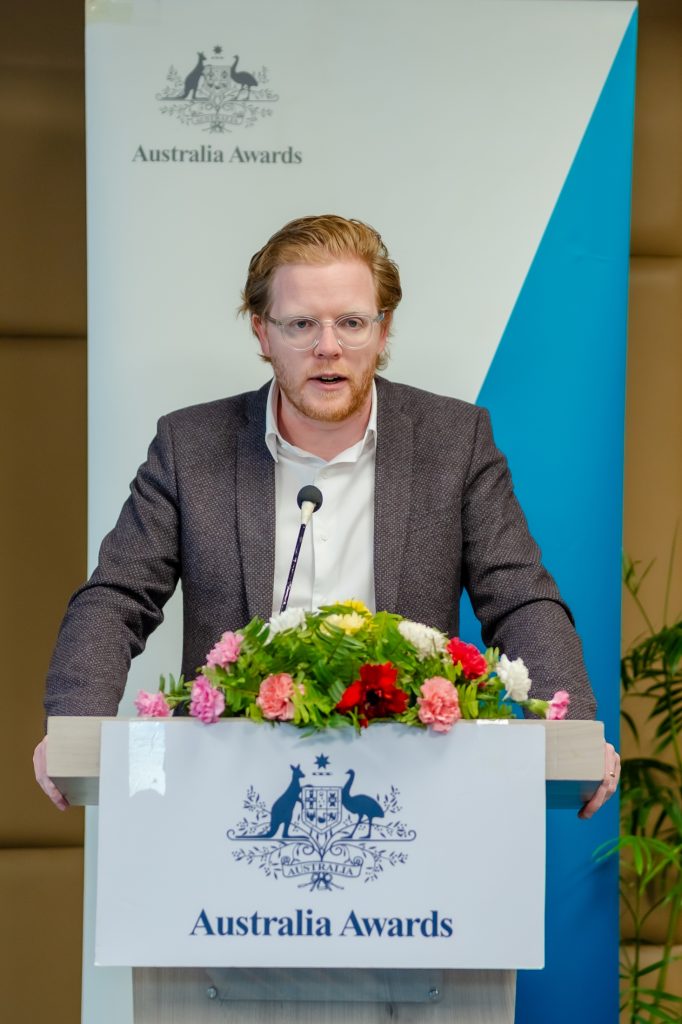
Mr Jones-Virma addressing the participants.
The workshop featured a panel discussion between three Australia Awards alumni and the Secretary of the National Human Rights Commission, Murari Prasad Kharel. Alum Pratima Gurung, founding president of the National Indigenous Disabled Women Association Nepal, moderated the panel, which explored the current state of human rights in Nepal, key challenges and strategies for advancing an intersectional approach.
The three alumni panellists drew on their experience to share different perspectives. Sagar Prasain highlighted the importance of intersectionality in Nepal’s diverse society and stressed the need for disaggregated data on people with disability. Nirmala Dhital emphasised investing in education to strengthen the rights of people with disability, while Dipawali Sharma addressed communication barriers for individuals with hearing disability, advocating for mandatory sign language interpretation in service delivery.
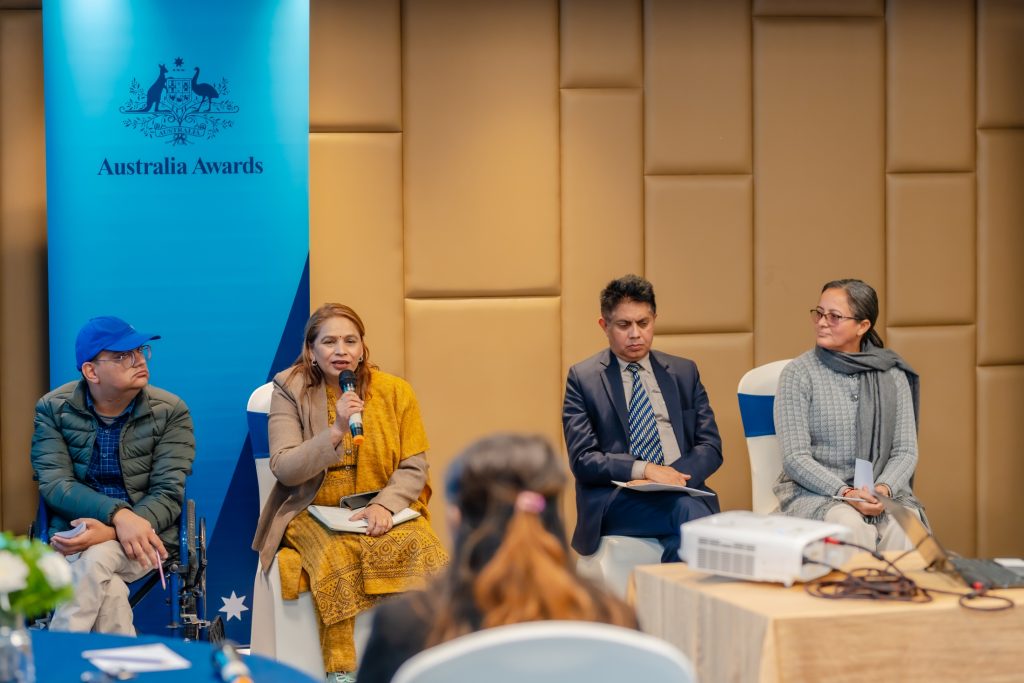
Alumni Sagar Prasai (left), Nirmala Dhital (second from left) and Dipawali Sharma (right) conducting the panel discussion with Mr Kharel (second from right).
Mr Kharel noted Nepal’s progress in policy development but underscored the gap in implementation. “Ensuring human rights is not only about resources, but also about attitude,” he said, urging alumni to support the National Human Rights Commission’s initiatives in promoting human rights.
Following the discussion, participants explored practical ways to contribute, such as creating disability-friendly workplaces. Alumni also proposed forming a community of practice and leveraging social media to share expertise and collaborate on human rights efforts.
Australia Awards – Nepal frequently organises similar events to mark international days of significance. Such events offer opportunities for alumni to engage, exchange knowledge and network.