

From global learning to local hope: Building climate resilience in Dhankuta
Posted: 25 August 2026
This year marks the 75th anniversary of Australian Government scholarships for students from the Asia-Pacific region, with the first scholarship recipients travelling to Australia under the Colombo Plan in 1951. To commemorate this significant milestone, Australia Awards – South Asia & Mongolia launched the Alumni Impact Storytelling Competition to celebrate the outstanding contributions alumni have made to the development of their countries.
The competition invited alumni to showcase the impact they have created and reflect on how their Australia Awards experience has helped shape their personal and professional journeys.
Nepali alum Bikas Adhikari’s entry was highly commended for illustrating how global learning can create local impact. His story traced the journey from an Australia Awards Short Course in Australia to climate resilience initiatives in Dhankuta Municipality, where he has helped strengthen disaster preparedness, climate adaptation planning and community-based development. Judges were particularly impressed by the practical application of lessons learnt through Australia Awards and the clear evidence of institutional and community-level change.
Bikas completed an Australia Awards Regional Short Course on Integrating Climate Change Adaptation and Disaster Risk Reduction to Reduce Vulnerability in 2025.
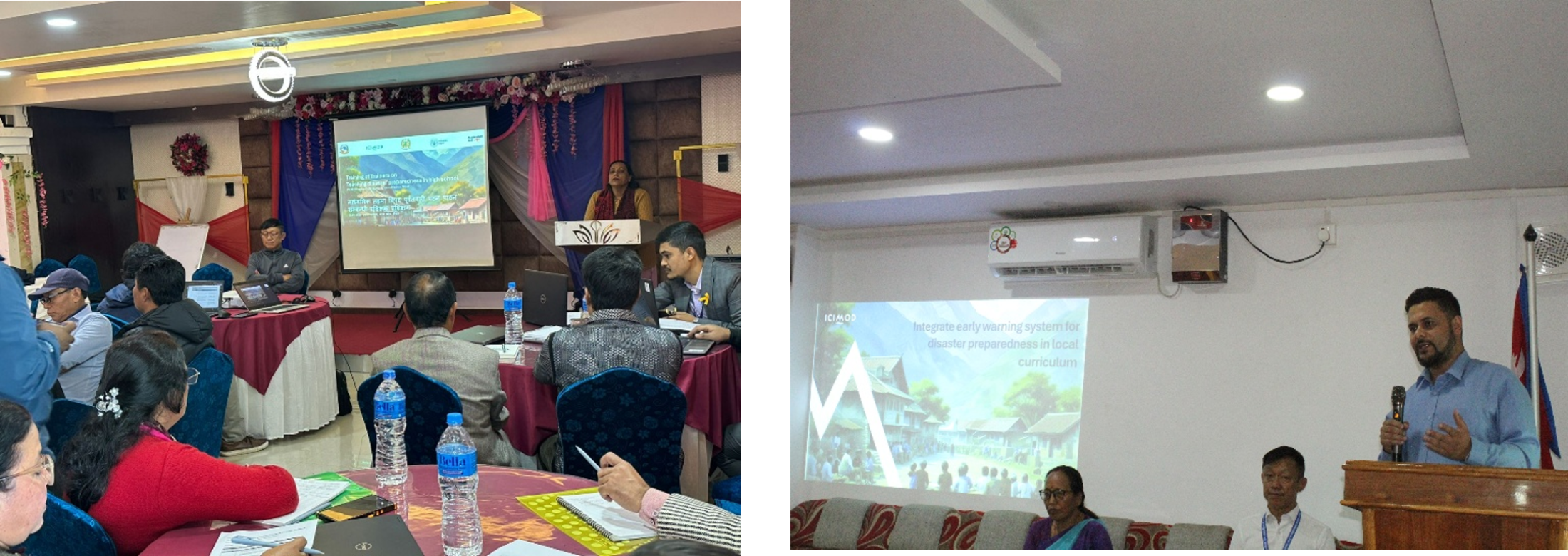
Photos capturing stakeholder discussions (with Bikas featured on the right) and collaborative interactions on integrating Early Warning Systems into school-level Disaster Risk Reduction.
When I returned to Dhankuta Municipality after completing the Australia Awards Short Course at Griffith University, I did not return with a certificate alone—I returned with a renewed sense of duty, grounded in evidence, policy and the lived realities of my community.
In Nepal’s mid-hills, climate change is no longer an abstract policy issue. It is an everyday governance challenge. Dhankuta faces increasing climate variability, landslides, erratic rainfall, water stress and forest fires—risks that directly threaten agriculture, infrastructure and livelihoods. These impacts are deeply felt by Indigenous and marginalised groups, whose livelihoods are closely tied to fragile ecosystems.
From learning to local action
Guided by national frameworks such as Nepal’s National Adaptation Plan (NAP) and Sendai Framework alignment, I began by translating learning into institutional practice. I shared key insights with the mayor, elected representatives and municipal officials, strengthening evidence-based planning, budgeting and coordination for climate resilience programs.
A key achievement was supporting the development of a school-based Disaster Risk Reduction (DRR) curriculum focused on Early Warning Systems in collaboration with the International Centre for Integrated Mountain Development (ICIMOD) and local stakeholders. This initiative aligns with global best practices in integrating DRR into education systems and is now ready for implementation, ensuring early awareness and preparedness among future generations.
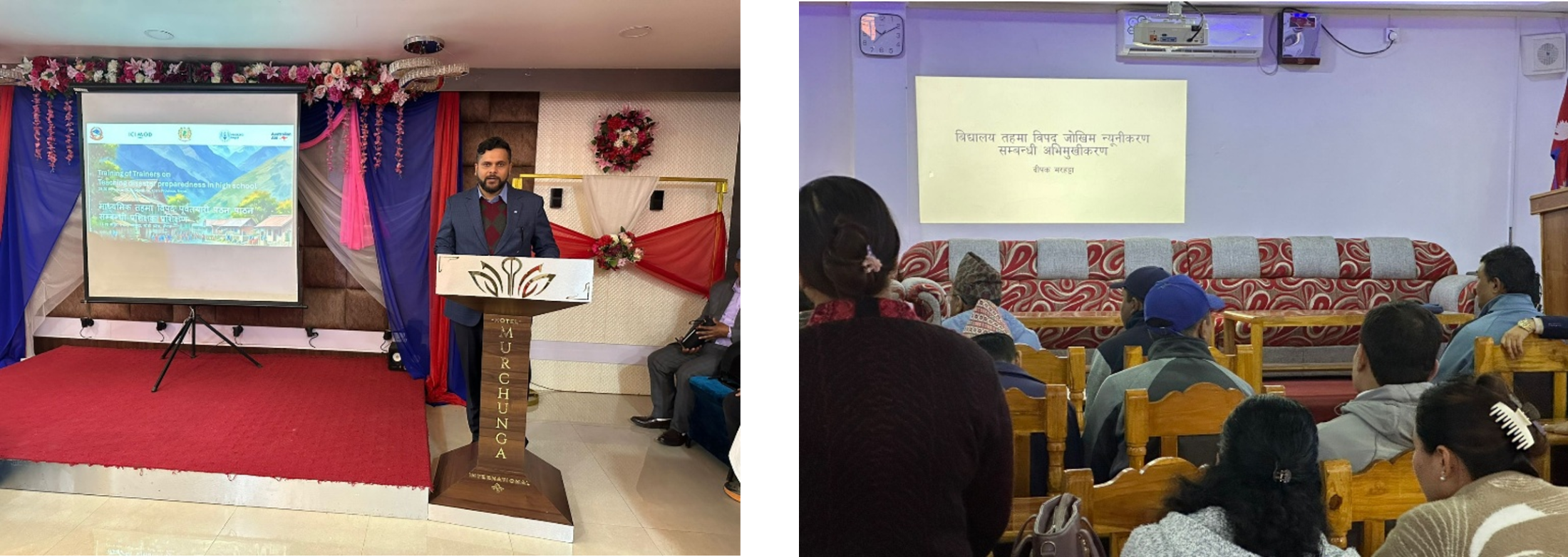
Photos capturing stakeholder discussions (with Bikas featured on the left) and collaborative interactions on integrating Early Warning Systems into school-level Disaster Risk Reduction.
Strengthening local systems for disaster governance
I also played a central role in establishing the Local Emergency Operations Centre in Dhankuta. Beyond infrastructure, we are shaping it into a regional DRR learning and coordination hub for the mid-hills, strengthening local disaster governance, response systems and institutional capacity.
This aligns with emerging DRR policy thinking that emphasises decentralised, risk-informed governance supported by local-level operational systems.
Policy integration
I have initiated the formulation of the Local Adaptation Plan of Action, ensuring that climate adaptation is systematically integrated into municipal development planning. This reflects Nepal’s shift towards programmatic, multi-sectoral adaptation approaches under the NAP framework.
Equally important is my focus on gender equality, disability and social inclusion. I have prioritised Indigenous Aathpahariya women in climate-resilient livelihoods through community-based tourism and local enterprise development, ensuring that adaptation policies also deliver social justice and economic empowerment.
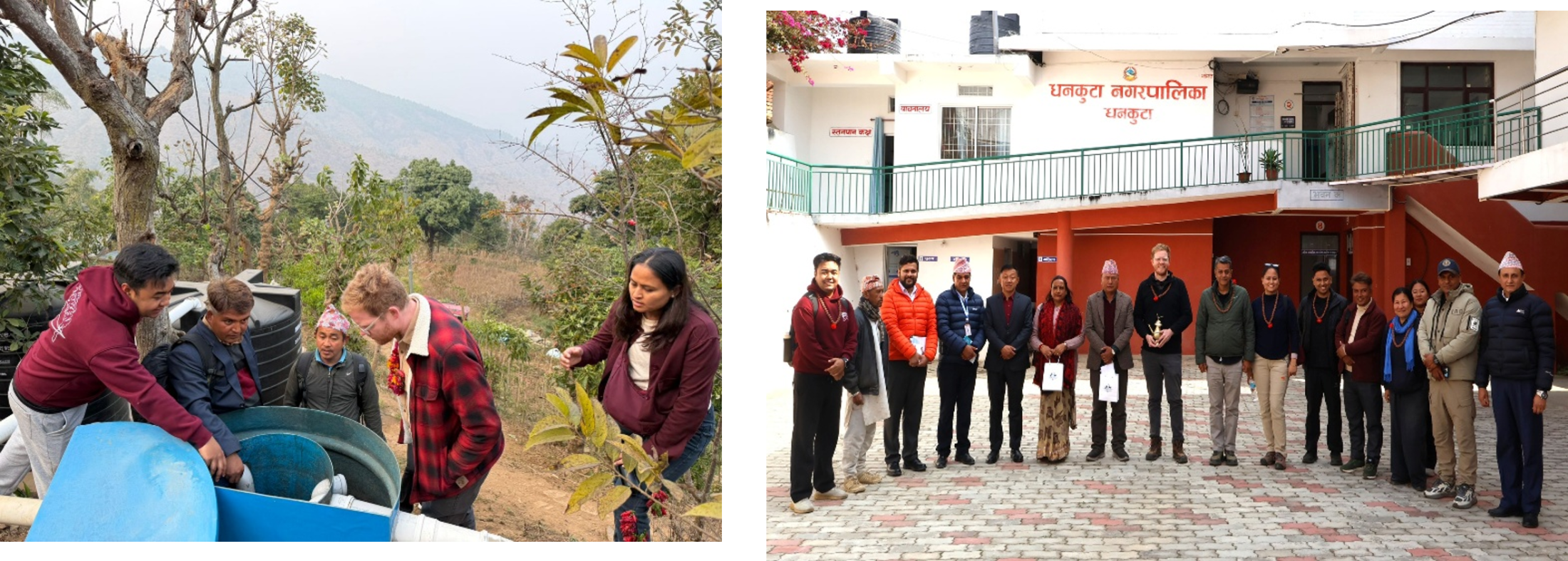
Snapshots from the visit of Dylan Jones-Virma (second from right in the left image, centre in the right image), Head of Development at the Australian Embassy in Kathmandu, to Dhankuta, (with Bikas featured third from left in the right image) highlighting engagement with local stakeholders and ongoing development initiatives.
Partnerships that drive change
My work is anchored in multi-stakeholder collaboration. I actively engage with the Australian Embassy / Department of Foreign Affairs and Trade, ICIMOD, United Nations Development Programme, United Nations Human Settlements Programme, ICLEI – Local Governments for Sustainability, Nepal Tourism Board, Smart Paani, Community Homestay Network, local non-government organisations, community-based organisations and government agencies.
These partnerships reflect a shift towards integrated climate governance—linking DRR, climate adaptation, watershed management and sustainable tourism into a unified local development framework. This approach is consistent with global evidence that climate resilience requires cross-sectoral and cross-institutional coordination.
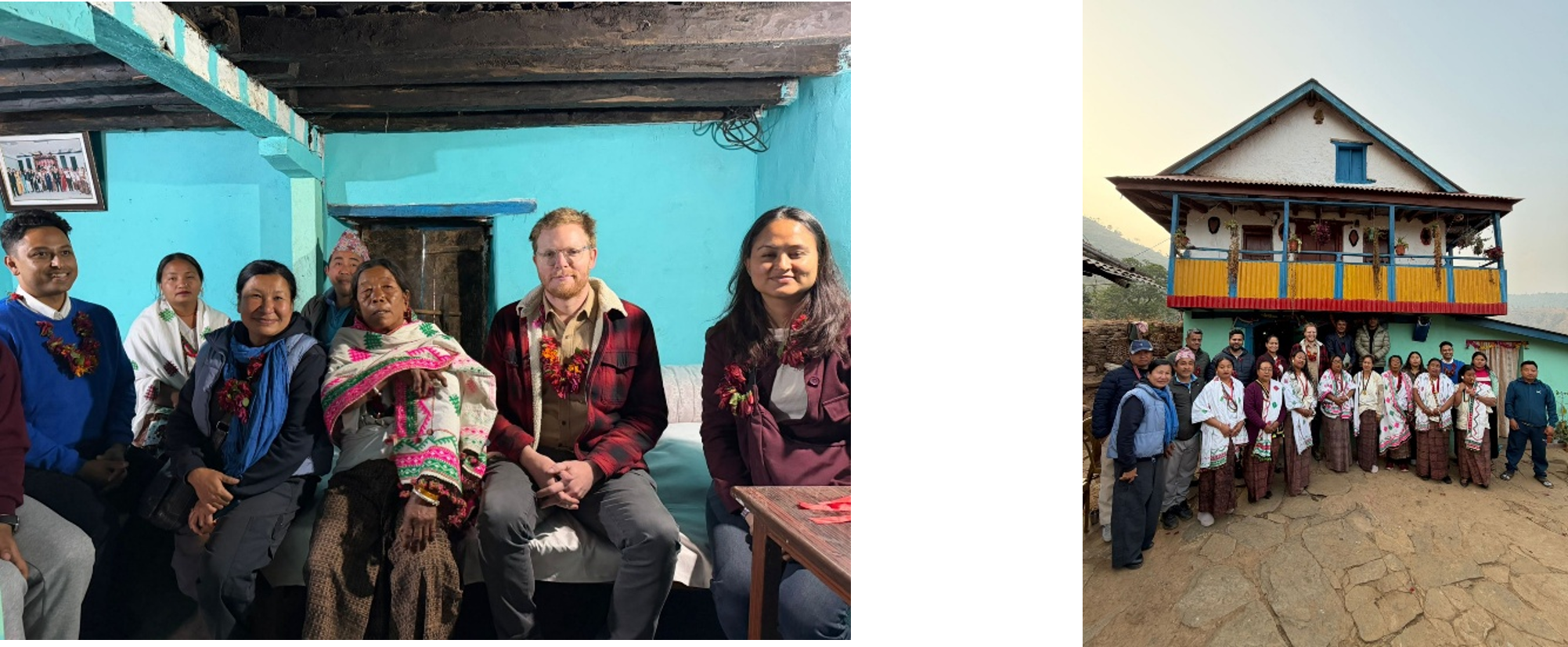
Snapshots from the visit of Dylan Jones-Virma (second from right in the left image: back row, third from right in the right image), Head of Development at the Australian Embassy in Kathmandu, to Dhankuta, (with Bikas featured back row, third from left in the right image) highlighting engagement with local stakeholders and ongoing development initiatives.
A municipal model for resilience
Today, Dhankuta is gradually evolving from a climate-vulnerable municipality into a learning model for integrated resilience in Nepal’s mid-hills. The integration of school-based DRR education, Local Emergency Operations Centre institutionalisation and inclusive climate tourism represents a shift from fragmented projects to systemic transformation.
My Australia Awards experience reshaped my professional perspective: resilience is not built through isolated interventions, but through policy coherence, institutional strengthening and sustained partnerships.
Most importantly, it reaffirmed that local governments are not just implementers of national policies—they are frontline innovators of climate solutions.
In Dhankuta, we are not only responding to climate change. We are learning to govern it—together, inclusively and sustainably.