

Alumni learn to tackle real world challenges using design thinking
Posted: 7 May 2026
On 24 April 2026, more than 40 Australia Awards – Nepal alumni took part in an engaging interactive workshop on ‘Design Thinking’ lasting nearly two hours.
Doma Tsering Tamang, Head of Cue Studio Asia, and Prabina Shrestha, Managing Director of Utopia Kathmandu, facilitated the session. Together, they introduced participants to the core principles of design thinking and demonstrated how the approach can be applied to address real-life workplace challenges.
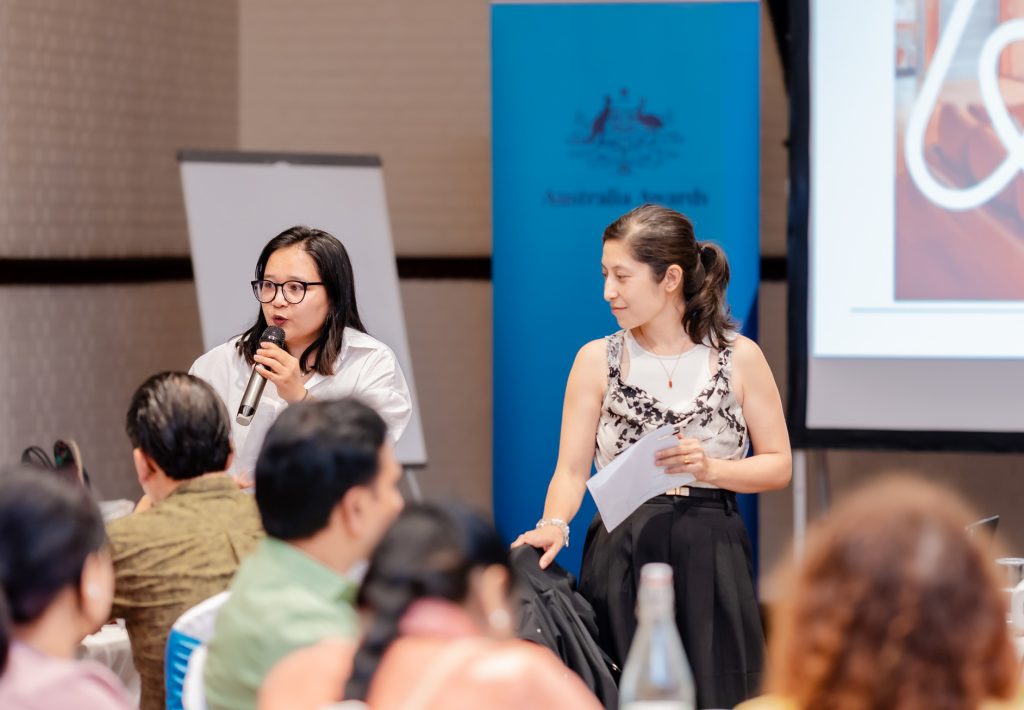
Doma Tsering Tamang (left) and Prabina Shrestha (right) facilitating the session.
Design thinking is a human-centred approach to problem-solving and innovation, grounded in adopting the right mindsets from the outset. These mindsets include developing empathy for people’s experiences and contexts, embracing ambiguity and exploration, cultivating confidence in one’s creative ideas, validating solutions through iteration with stakeholders, and welcoming failure as an essential learning opportunity.
The facilitators also walked participants through the design thinking process, which involves cycles of divergence and convergence across five stages: empathise, define, ideate, prototype and test. This process can be repeated as many times as needed to refine solutions.
Throughout the workshop, the venue was alive with discussion as alumni engaged in hands-on activities. Participants worked in groups to develop solutions to common workplace challenges involving teamwork, communication, time management and decision-making, applying the full design thinking process and learning how to reframe problems as opportunities.
Following the event, many participants shared positive feedback about how the session benefited them and what lessons they took away from the experience.
For example, Suchita Shrestha, Project Lead/Deputy Director at The Small Earth Nepal, reflected that she learnt that “divergence and convergence of ideas is important.”
Bhoj Bikram Thapa, Senior Water, Sanitation and Hygiene (WASH) Engineer, said, “I have learnt how to solve complex problems by using the design thinking process. I will now start with empathy to solve problems.”
Freelancer Nibha Shrestha was inspired to “be open to ambiguity”—a sentiment shared by Rita Gurung, Program Lead at LI-BIRD (Local Initiatives for Biodiversity, Research and Development). “Embracing ambiguity is a good thing that contributes to creative confidence and optimism,” Rita said.
Meanwhile, Dr Sunita Pandey, Senior Plant Protection Officer at the Ministry of Agriculture and Livestock Development, said that she will now “listen more from users about the challenges/problem”.
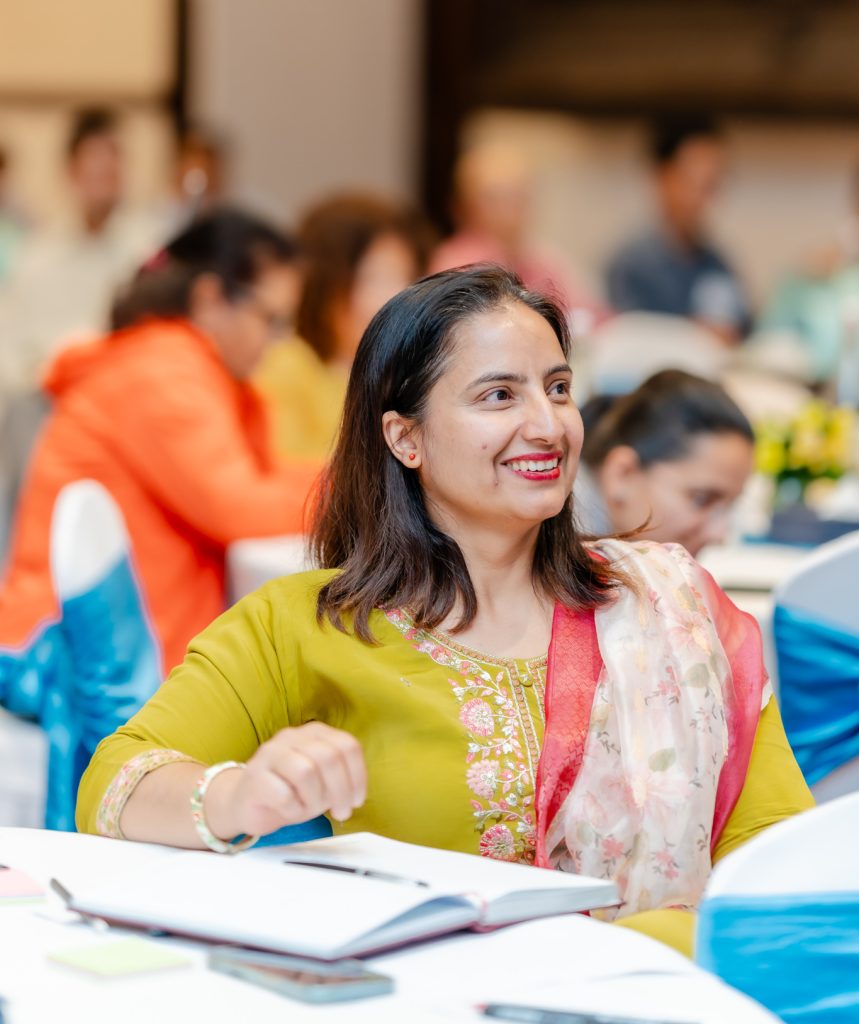
Alum Dr Sunita Pandey at the session.
“I will create a prototype and test before launching anything big,” added Reejuta Sharma, Program Manager at Felm Nepal.
Finally, Dr Umesh Acharya, Senior Scientist at the National Agricultural Research Council, said he particularly valued the “impact and effort matrix to choose solutions to test in my research space”.
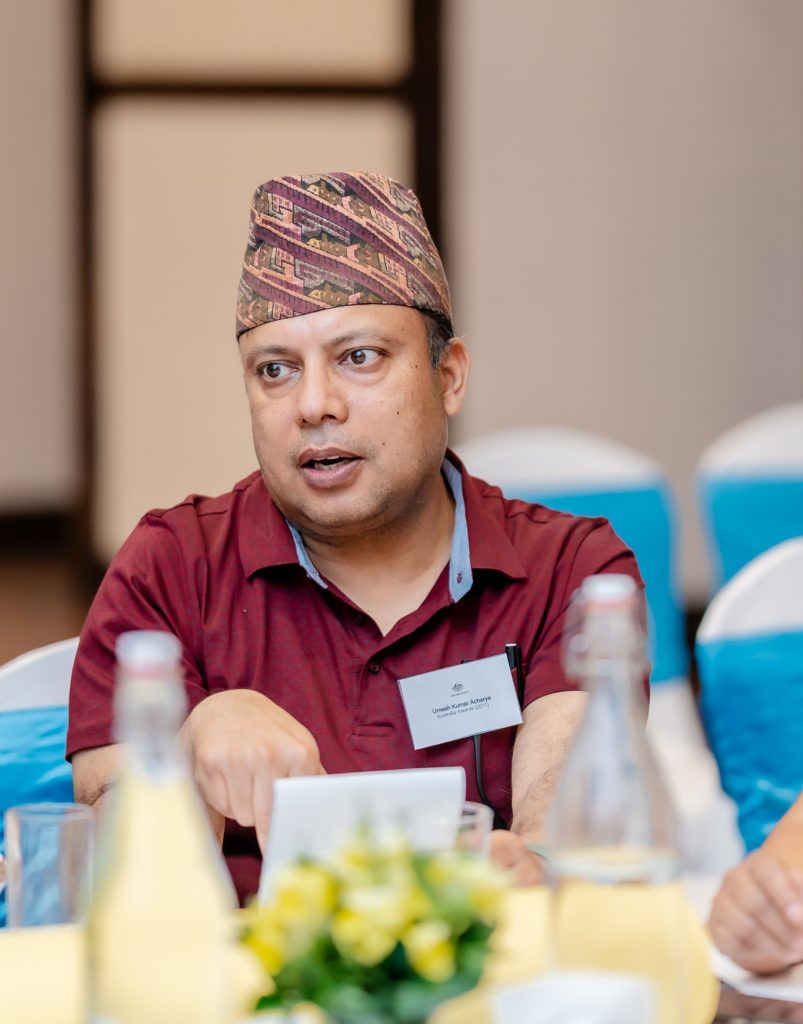
Alum Dr Umesh Acharya participating in the session.
The workshop was part of Australia Awards – Nepal’s Alumni Learn & Network Series, which offers short professional development modules designed for immediate workplace application. Each session concludes with a networking opportunity, enabling alumni to strengthen professional connections and exchange insights.
Past sessions have covered using LinkedIn effectively, strategic decision-making, emotional intelligence and artificial intelligence. To attend upcoming workshops, alumni must register in advance.